

Introduction
Search Engine Optimization (SEO) is the backbone of digital marketing. Among its different categories, On-Page SEO plays a crucial role in improving your website’s visibility, user experience, and ranking on Google. If you’re a blogger, business owner, or SEO professional, mastering on-page SEO is a must to attract organic traffic and boost conversions.
What is On-Page SEO?
On-Page SEO (also known as on-site SEO) refers to all the optimizations you do directly on your website’s pages to improve search engine rankings. It focuses on both the content and the HTML source code, making your site easier to crawl, understand, and rank by Google and other platform like Bing, Amazon,Youtube etc.
Unlike off-page SEO (backlinks, social signals, etc.), on-page SEO is fully under your control.
Why is On-Page SEO Important?
Here’s why it matters:
- Better Search Rankings – Proper optimization helps your pages appear on the first page of Google.
- Improved User Experience – Structured content, fast loading, and mobile-friendly design keep users engaged.
- Higher CTR (Click-Through Rate) – Optimized meta titles and descriptions attract more clicks from search results.
- More Organic Traffic – Google favors well-optimized content, driving long-term traffic to your site.
- Conversion Growth – Relevant and valuable content encourages users to take action (sign up, buy, or contact).
Key On-Page SEO Elements
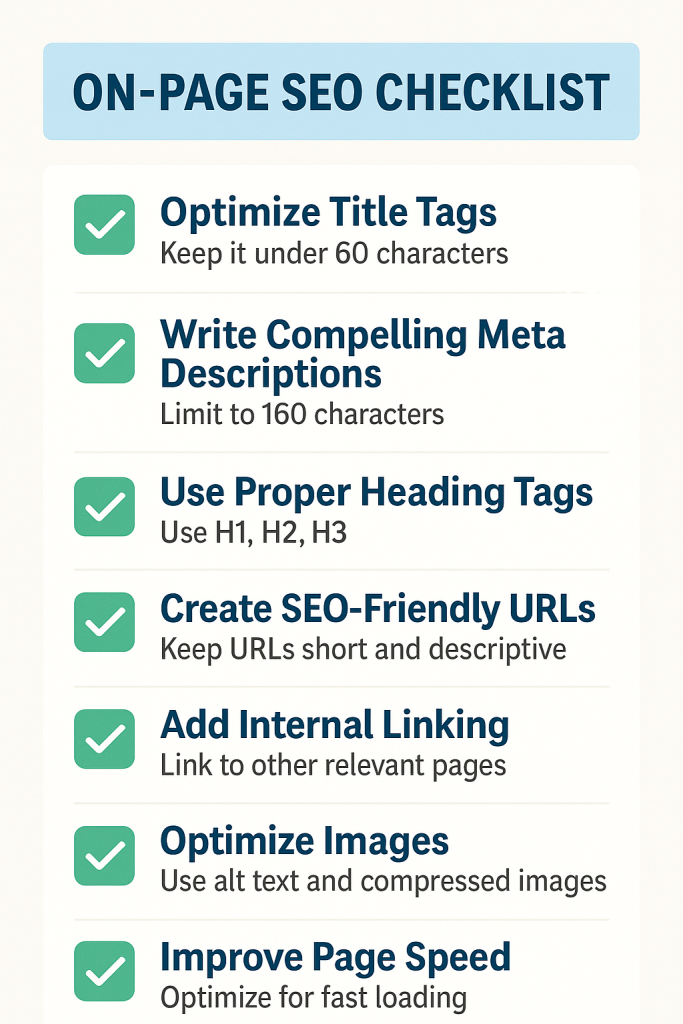
Here are the essential components to optimize:
1. Title Tags
- Include your target keyword.
- Keep it under 60 characters.
- Example: “On-Page SEO: The Ultimate Guide for Beginners”
2. Meta Descriptions
- Write engaging summaries under 160 characters.
- Add target keywords naturally.
3. Header Tags (H1, H2, H3…)
- Use H1 for the main title and break content into H2/H3 for easy readability.
4. URL Structure
- Keep URLs short, descriptive, and keyword-rich.
- Example: yourdomain.com/on-page-seo-guide
5. Keyword Optimization
- Place keywords naturally in headings, intro, and conclusion.
- Avoid keyword stuffing.
6. Internal Linking
- Link to other relevant blog posts or pages on your site.
- Example: “Read more about [Keyword Research Checklist].”
7. Image Optimization
- Use compressed images for faster loading.
- Add alt text with relevant keywords.
- Example: alt=”on-page seo checklist for beginners”
8. Mobile-Friendliness
- Ensure your site looks great on all devices.
- Test with Google Mobile-Friendly Test.
- Use readable font sizes (16px or more).
- Avoid pop-ups that block the screen on mobile.
- Ensure buttons and links are easy to tap.
9. Page Speed
- Use caching, compression, and optimized images to reduce load time.
10. Content Quality
- Publish unique, helpful, and engaging content that answers user intent.
-more details are explained in our SEO checklist
Different Between On-page and Offpage SEO:
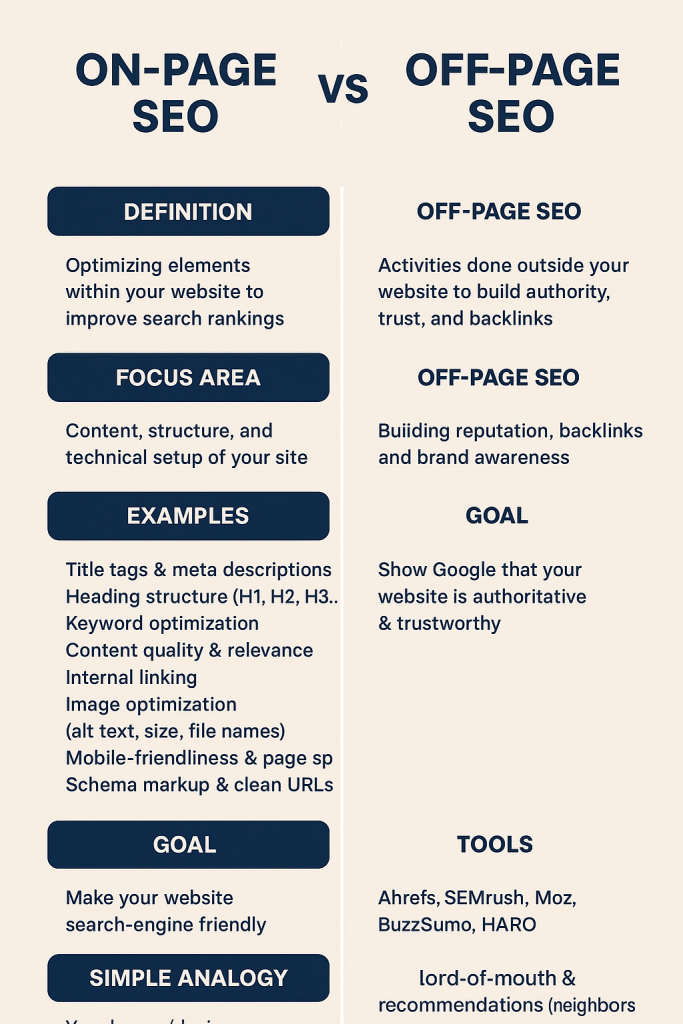
On-page and off-page SEO are two fundamental strategies for improving a website’s search engine ranking, but they focus on different aspects of optimization. On-page SEO involves optimizing elements within your website to make it more appealing to both users and search engines. Off-page SEO, on the other hand, focuses on building your website’s reputation and authority outside of your site through activities like link building and social media engagement.
Conclusion
On-Page SEO is the foundation of your website’s success in search engines. By optimizing titles, meta descriptions, headings, URLs, and content, you not only rank higher but also provide a seamless user experience. Remember, SEO is not just about pleasing search engines—it’s about helping your audience find exactly what they’re looking for.